On October 6, 1973, Egypt and Syria attacked Israel from two fronts simultaneously. By October 17, the Arab world had drawn a weapon the West did not know it was vulnerable to. Not a rifle. Not a tank. A barrel.
The 1973 oil embargo did not last long. Five months. It did not stop the flow of oil entirely. And yet it ended one era and started another. The era of cheap, abundant energy that had powered Western prosperity since 1945 died in the autumn of 1973. It has not come back.
The Setup: A War, an Airlift, and a Warning Ignored
The Yom Kippur War began on the holiest day of the Jewish calendar. Egypt crossed the Suez Canal. Syria pushed into the Golan Heights. Israel, caught off guard for the first and only time in its history, found itself in serious military trouble within 48 hours.
Washington made its decision quickly. Between October 14 and October 30, Operation Nickel Grass delivered over 22,000 tons of military equipment to Israel: tanks, ammunition, aircraft. The airlift was visible, deliberate, and unmistakable in its message. Nixon signed a $2.2 billion military aid package for Israel on October 20. The Arab world was watching every cargo flight.
Saudi King Faisal had warned Nixon directly in writing in August 1973: American support for Israel would make it impossible to continue supplying the United States with oil. The letter was read. The warning was not acted upon. The oil ministers took note.
October 17, 1973: The Vote in Kuwait City
Eleven oil ministers of the Organization of Arab Petroleum Exporting Countries gathered in Kuwait City. The resolution they passed was precise: production would be cut by five percent per month, every month, until Israel withdrew from the territories occupied since 1967. The United States and the Netherlands were placed under a direct embargo. No Arab oil. None.
The mechanism was not about volume. The United States imported roughly 1.2 million barrels of Arab oil per day at the time, about six percent of total consumption. Six percent is a number that sounds manageable. It was not. What the embargo triggered was a global redistribution of supply as friendly nations diverted their cargoes to avoid punishment. Every cargo that moved away from embargoed destinations tightened the market for everyone else. The six percent hole became a structural price shock.
Saudi Arabia went further than the OAPEC resolution required. On October 20, the day after Nixon signed the aid package, Riyadh announced a complete and total embargo on all oil exports to the United States. King Faisal, who had spent years cultivating a relationship with Washington, had run out of patience.
"America's complete support of Zionism and against the Arabs makes it extremely difficult for us to continue to supply the United States with oil, or even maintain friendly relations."
King Faisal of Saudi Arabia, October 1973
What It Did to the World
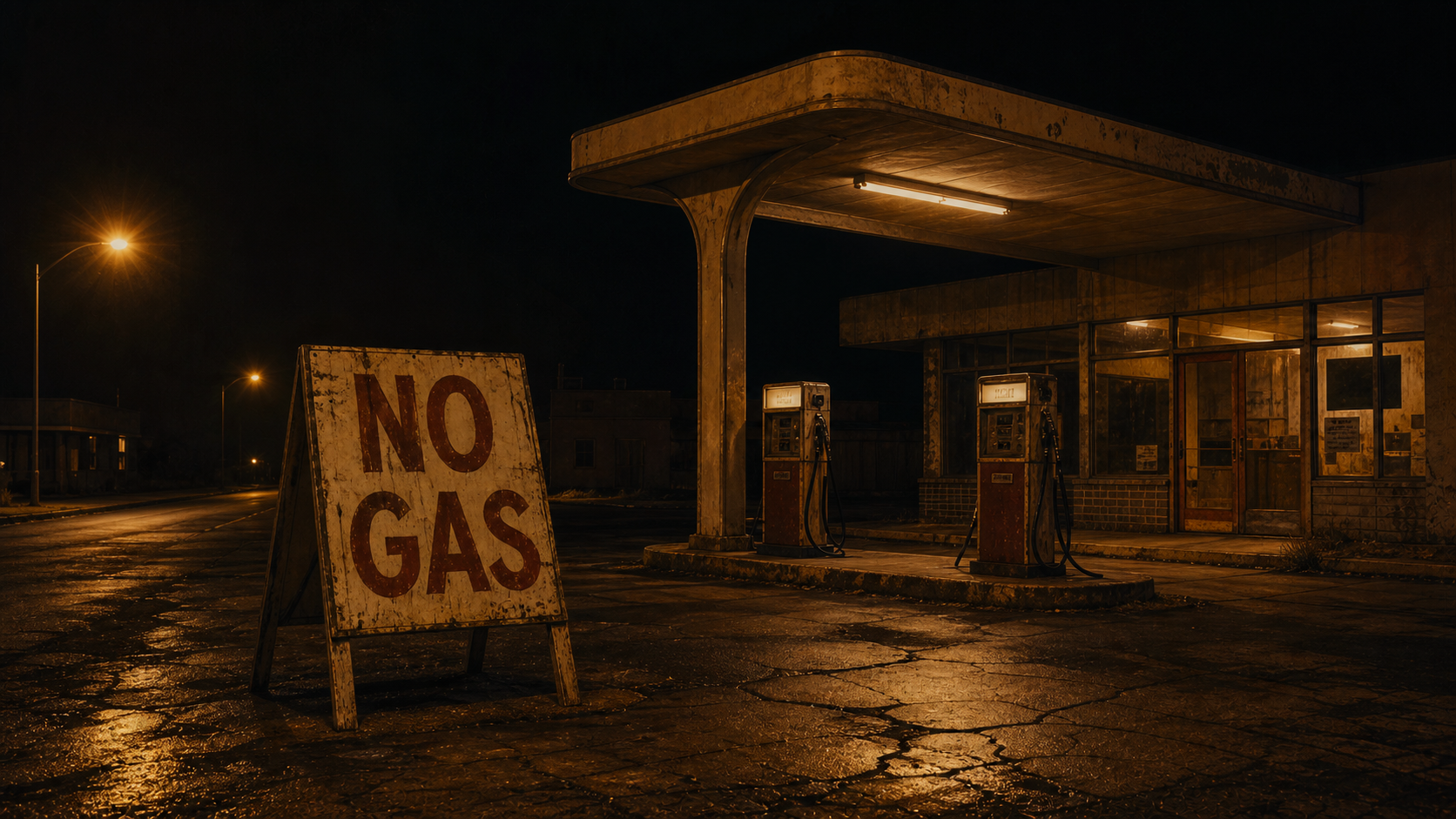
Americans queued at gas stations before sunrise. The federal government introduced odd-even rationing: if your license plate ended in an odd number, you bought gas on odd-numbered days. Speed limits were cut to 55 miles per hour nationally. Sunday gas sales were banned entirely. Richard Nixon asked every American to set their thermostat to 68 degrees Fahrenheit and keep it there.
The price of a barrel of crude that had traded at $2.90 in September 1973 reached $11.65 by January 1974. A 300 percent increase in four months. For a global economy built on the assumption that energy was cheap and permanent, the recalibration was violent. The 1973-74 recession that followed hit every industrialized nation.
The consequences that outlasted the embargo were structural. The International Energy Agency was created in November 1974, built specifically to coordinate Western responses to future supply disruptions. The United States Congress authorized the Strategic Petroleum Reserve in 1975, a system of underground salt caverns in Louisiana and Texas that would eventually hold over 700 million barrels. Every energy policy written in the West after 1973 carries the genetic code of that autumn.
The embargo ended formally on March 18, 1974, when OAPEC ministers met in Vienna and lifted restrictions against the United States. The price did not return to $2.90. It never did. The world that existed before October 1973 was gone.
Why the Barrel Never Forgot
The 1973 embargo established one fact that every subsequent decade has confirmed: oil is not a commodity. It is a political instrument. It has physics, yes. It has markets, yes. But it also has memory, and it has will, and the countries that produce it understand this in a way that consuming nations spend enormous energy pretending otherwise.
Every strategic reserve, every renewable subsidy, every energy independence mandate written since 1973 is a direct answer to eleven men in a room in Kuwait City on a Tuesday in October, who correctly identified that the industrialized world had built itself on a dependency it had no plan to defend.
The weapon was drawn once. It proved effective. It was never put down.
The price is still being paid.